



The advantages of electric vehicle salary sacrifice schemes
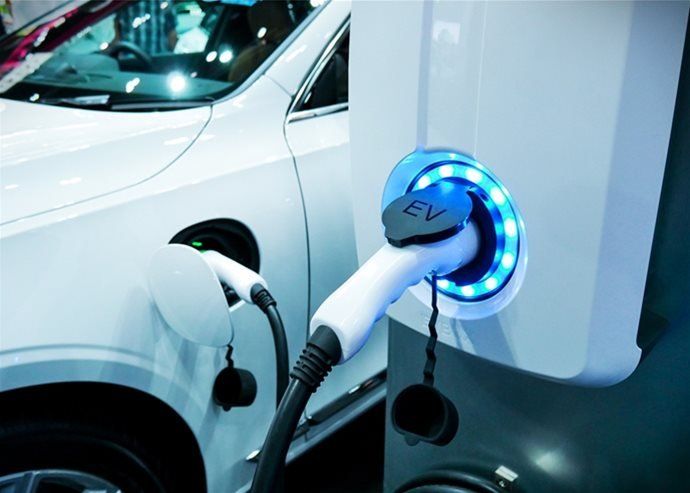
Businesses looking to reward and retain staff members may wish to consider offering an electric vehicle (EV) salary sacrifice scheme.
Not only are many EVs better for the environment, but they could also offer businesses considerable savings.
Businesses can use employee salary sacrifice – similar to schemes offered for pension contributions, cycle to work schemes and childcare vouchers – to fund the purchase of new EVs in a tax-efficient manner.
In principle, salary sacrifice is simple, the employee ‘sacrifices’ part of their salary and the employer invests this in a benefit – in this case, an EV. Using salary sacrifice saves the employee National Insurance Contributions (NICs) and Income Tax.
However, in recent years HM Revenue & Customs (HMRC) has taken a tougher approach to many salary sacrifice schemes, which has often made them less effective.
Thankfully, a special exemption was put in place for ultra-low emission vehicles to encourage motorists to swap their petrol and diesel cars for electric and hybrid models.
When this was confirmed it was made clear that the provision of an EV via salary sacrifice would be considered a benefit-in-kind.
Initially, the benefit-in-kind, or BiK rate, on a pure electric car was 16 per cent, which in many cases meant that there was little or no benefit.
However, following changes in April last year, all pure electric cars now have a zero BiK rate and salary sacrifice benefits can be felt in full.
The zero per cent rate also applies to hybrid vehicles that are first registered from 6 April 2020 that produce between one and 50g/km of CO2 and are capable of at least 130 miles on battery power alone.
The change in rates coincided with more complex rules regarding emission and economy tests, which determine rates for vehicles including hybrids, which may have an impact on existing hybrids acquired via salary sacrifice.
The Treasury has recognised that the older tests may unfairly disadvantage some company hybrid car users and so to achieve fairness it has reduced the BiK rates used for older car models.
This reduction will fall to one per cent in the 2021/22 financial year and will disappear altogether in the following year. This means that there will be no reduction in its BiK rate for these vehicles from April 2022.
People looking to purchase a new company car in the next year should review the Government’s latest rates, which can be found here. Be aware though that these rates change annually and may differ after April 2021.
There are several other tax incentives for both company car users and the businesses that offer this benefit, especially where it is used for business purposes, including:
- Corporation Tax relief
- Reclaiming VAT on a vehicle purchase
- Lower vehicle excise duty
- Plug-in grants
- Tax-efficient electric car charging points
It is not surprising, as technology advances, that more businesses are considering EV salary sacrifice or the purchasing of a fully electric or hybrid fleet.
Beyond the immediate tax benefits for a company, the employer should also look at the advantages that offering a company car can have on retaining staff.
Offering EV salary sacrifice is an excellent way of rewarding employees in a tax-efficient manner that doesn’t incur significant costs for the business or the employee.
Looking further ahead, the Government is now committed to a ban on the sale of new purely petrol and diesel vehicles by 2030, which is now less than a decade away.

For many businesses, short-term finance can provide an essential lifeline when cash flow becomes tight. Whether a business needs support covering a gap between paying suppliers and receiving customer payments, or managing seasonal demand, the right type of finance can keep a business moving during uncertain times. However, using short-term borrowing without a clear strategy can quickly become a slippery slope of missed payments and further injections of cash. Choosing the right type of finance for your business? Not all types of short-term finance are designed for the same purpose, so businesses need to choose the option that best matches their needs. An overdraft can provide a flexible cash buffer for day-to-day cash flow pressures, with interest usually charged only on the amount borrowed. Invoice finance can help unlock cash tied up in unpaid business invoices, while a short-term loan may be more suitable for funding a specific purchase or project. Problems can arise when businesses use one type of finance to solve an issue it was not intended to address. A short-term cash flow gap can turn into a long-term borrowing habit, causing interest costs and fees to build up over time and reduce profitability. How to avoid the interest trap? While short-term finance can be a valuable tool, it is important to understand the full cost of borrowing. Some forms of finance, such as certain credit cards, bridging loans and revolving credit facilities, can have higher interest rates and shorter repayment terms. Although these products can be useful in the right circumstances, they can place additional strain on businesses with unpredictable cash flow. Understanding the total cost of borrowing can help avoid unnecessary expense and ensure the finance remains affordable. Matching the right type of finance to the right business need can help businesses manage cash flow more effectively and avoid falling into an expensive cycle of debt. How can we help? Before you fall down the slippery slope of short-term finance, get in touch with an accountant. We understand that short-term finance can sometimes feel like the only option. Our team can help assess your cash flow needs, review your funding options and support you in choosing a solution that helps your business grow while keeping borrowing costs under control. For support with short-term finance options, get in touch with our team.

The rate of inflation has hit 2.9 per cent in July 2026, up from 2.6 per cent in June, according to the latest data that has been published by the Office for National Statistics (ONS). This is the first rise in the national rate of inflation since March 2026, with the increase in the energy price cap being partly to blame. Businesses need to understand how this hike will affect them and what they must do to mitigate the issues. How is inflation affecting businesses? Higher inflation can increase the cost of running a business. Energy-intensive businesses and manufacturers are likely to feel the greatest impact, as rising energy prices can lead to higher production, transport and operating costs. Many businesses are already dealing with tight profit margins and may find it difficult to absorb these additional costs. Passing increased costs on to customers is not always straightforward, as consumers remain cautious about spending and may look for cheaper alternatives if prices rise too much. Inflation can also affect employment costs. Employees may expect higher pay to help maintain their spending power, creating additional pressure on business finances. With employment costs already rising, some organisations may take a more cautious approach to recruitment or delay planned investments. What should businesses do to mitigate the impact of inflation? With inflation remaining uncertain, businesses should review their budgets regularly and keep a close eye on cash flow. Understanding where costs are rising most quickly can help businesses identify areas where savings or efficiencies can be made. Businesses should also assess their pricing strategies to ensure they remain competitive while protecting profitability. Investing in technology, improving efficiency and carefully managing expenditure may help reduce the impact of rising costs. Strong financial planning and regular monitoring of business performance can help organisations remain resilient if inflation continues in the months ahead. How can we help? While the rate of inflation increasing to 2.9 per cent may not seem like a huge change, businesses must consider the impact that it will have on wider spending. Our team can help you manage your cash flow by completing financial forecasting to ensure that your business stays resilient should inflation rates increase further. For support with cash flow, get in touch with our team.

For many people, giving financial support to family members is an important part of their financial planning. Whether it is helping children with pension contributions or providing ongoing assistance, gifting can play an important role in Inheritance Tax (IHT) planning. The normal expenditure out of income exemption under Section 21 of the Inheritance Tax Act 1984 allows for gifts to be made without being chargeable for IHT purposes, if specific conditions are met. What are the requirements? Under Section 21, gifts can be exempt from IHT if they are part of a person's normal spending habits, are paid from their income and leave them with enough income to maintain their usual standard of living. This exemption only applies to gifts made from surplus net income, not from capital or savings. For example, withdrawals from an investment bond or the capital part of a purchased life annuity payment would not qualify. The donor must also be able to cover their normal living costs from their remaining income and cannot give away income and then use capital to make up any shortfall. Why is record-keeping important? As the exemption is usually claimed after death, it is important to keep clear records of any gifts made under the normal expenditure out of income rules. HMRC form IHT403 includes a schedule that can be used to record these gifts as they are made and can help support a future claim. To work out whether gifts need to be reported, the donor must add together any gifts made under this exemption and any chargeable lifetime transfers made during the previous seven years. If the total is more than the available nil rate band, all gifts must be reported to HMRC using form IHT100. HMRC will then review whether the exemption applies and confirm its decision in writing. If the total remains within the nil rate band, the exemption is usually reviewed only after the donor's death, when the executors can claim the exemption using forms IHT400 and IHT403. How can we help? Planning for IHT helps to safeguard your family's future, as utilising vital allowances enables you to minimise your IHT contributions. Our team of accountants can support you with gifting out of income so that you can provide for your family's future. Get in touch with our team for support with Inheritance Tax planning.