









Making Good 

Businesses Better...

in 3 Simple Steps

Book A Consultation

Making Good 
Businesses Better

 Trust us to take care of you.

Book A Consultation

Take 3 Simple Steps With 10.CA

Together we can make the difference

Lateness, lack of control, uncertainty…all things that we all dislike in running a business.


We return calls and emails quickly, answer questions fast, take away any uncertainty you have in making decisions, in short, we will give you back control, to get and keep you up-to-date, to give you focussed answers quickly so that you and your business gain and stay in control.


Our costs are agreed upon before we start any work, at the ‘Welcome’ stage.


Our clients love fixed costs as it gives them certainty, builds Trust and allows us to focus on our work and on Taking care of you.


We want you and your business to be the best they can be, which is why we take the time to listen to your goals and aspirations at the earliest opportunity.


Once we have listened and understood your needs, we embrace that in our work and in the focussed advice we give.


We make sure we use the best technology and the best systems (we are Cloud Platinum partners to Xero and QuickBooks).


The best people are recruited and trained to look after you and keep you up to date with what is best for you and your business.


Our simple 3 step service promise gives us the opportunity to help you create a truly rewarding business.

  • Making Good Businesses Better... in 3 Simple Steps


    Button
  • Making Good Businesses Better... in 3 Simple Steps


    Button
  • Making Good Businesses Better... in 3 Simple Steps


    Button
  • Making Good Businesses Better... in 3 Simple Steps


    Button

Welcome to 
10. Chartered Accountants 

We offer full tax, bookkeeping and accounting services, so you can focus on everything else in your business. 

With our expertise and know-how, we'll help you save money, reduce stress, and focus on your real priorities. 

Let’s talk about your accounting needs

Send us your details and we’ll arrange a time to discuss how we can support your firm or business.

About 10 Chartered Accountants Northampton

10.CA are Chartered Accountants, based centrally in Northampton. We provide a client focussed service to forward-thinking business people and their businesses. Our clients receive timely, effective and highly committed support to help their businesses move forward in an environment that is increasingly complex, competitive and fast-moving. 

We understand the challenges and opportunities facing businesses today, in particular with the added challenges that have been presented overcoming the impact of the Covid pandemic on us all. We have had to be especially focussed during this time.

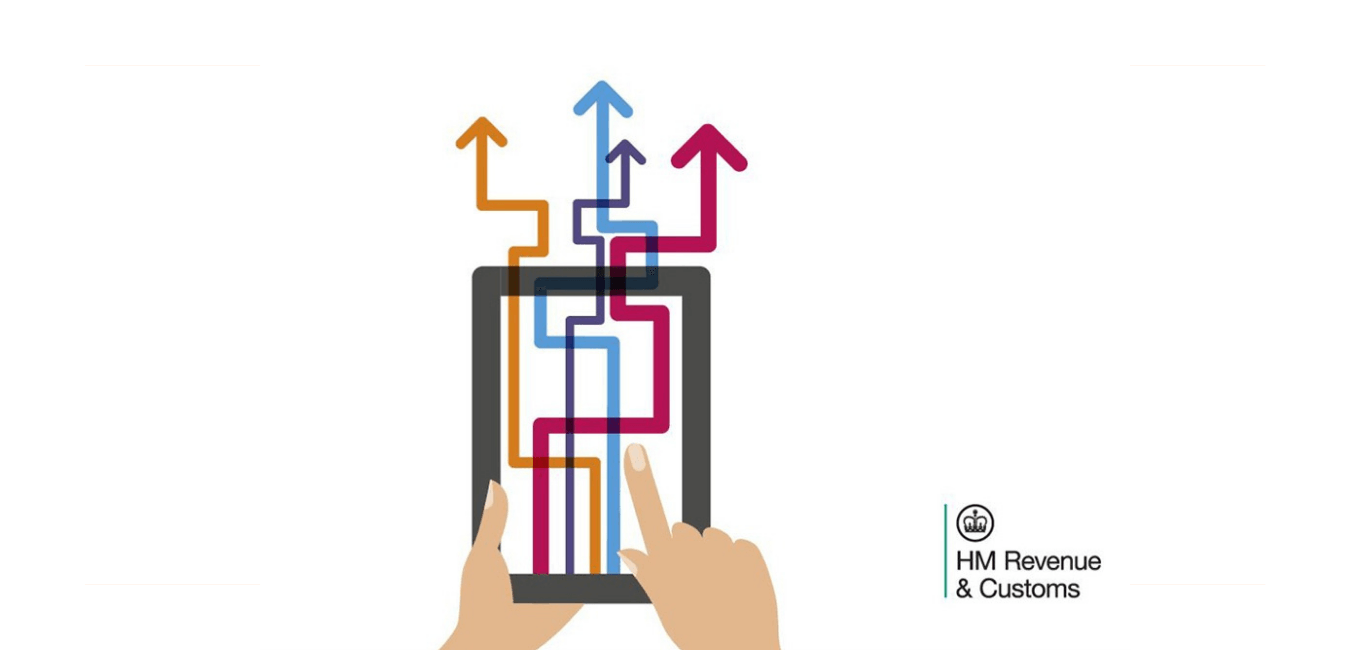
With the development of Cloud-based software and the migration of digital accounting, HMRC’s vision to digitalise the UK tax system is now well underway. 10. CA is here to help its clients in Northampton and we have a specialists team to ensure that your business is guided through the process of Making Tax Digital. We are tax specialists and Cloud Platinum partners to Xero and QuickBooks putting us in a great position to advise you in relation to your future business needs.

Our friendly team of qualified accountants Northampton help take the stress away from government agency red tape, as well as offering professional information and insight for you to plan your business strategically.

Check Out Our Accounting Services

Our range of services to businesses are broad

10. Chartered Accountants Happy Clients

Join our growing list of satisfied clients

Our specialist client industries and sectors include:

"I would have no hesitation in recommending them to any business, in fact I have done so several times."

 Dentists 
Stay on top of the regulations that affect your business. 
Licensed Trade 
Stay on top of the regulations that affect your business.
Contact us today
E-Commerce
Stay on top of the regulations that affect your business. 
Start ups
Stay on top of the regulations that affect your business.

 Cloud Accounting Platinum Partners to Xero & QuickBooks:

Information drives decision making. It's no understatement to say that Cloud accounting has revolutionised the relationship with our clients…if the Cloud is set up and used properly, we no longer need to wait for financial information, it is ready to use to advise clients so that decisions can be made, fast.

Our clients benefit from our depth of experience and detailed knowledge of Cloud accounting. We fully embrace the cloud-based technologies which have radically changed the way businesses process their data and produce critical timely financial information.

We are also proud to have received recognition from the two worldwide leaders in cloud accounting software provision, Xero and QuickBooks with the award of Platinum Partner status from each of them.

In adopting Cloud throughout the practice, we have the opportunity to collaborate with you online so that we can use our time providing true value rather than doing the routine keystrokes. Check out the key benefits of adoptin g Cloud here.

Need a fresh approach? A new Accountant? 

10. Chartered Accountants News Updates

Keep up to date with the latest news

By Charlie Flockhart July 20, 2026
You are likely aware of the upcoming inclusion of unspent pension pots for Inheritance Tax (IHT) calculations from 6 April 2027. This has sparked a wave of interest in finding alternative ways to save for the future. While it might seem necessary to reduce the amount contained in your pension pot, there are tax implications that must be considered. Is it a good idea to gift a lump sum from my pension? Accessing a lump sum of your pension can be useful for a range of reasons, as you or your loved ones could benefit from the money you have saved over years of work. However, IHT is not the only tax implication of accessing pension lump sums, as these can be subject to Income Tax. You can access up to 25 per cent of your pension tax-free and the most you can take across all pensions tax-free is £268,275 – a figure that only concerns those with pensions worth more than £1,073,100. If you are under 75 and expected to live less than a year because of serious illness, you may take all of the money from your pension in a lump sum without paying tax, provided it is below the lump sum and death benefit allowance. Knowing what is possible to withdraw then allows you to determine whether gifting is a viable strategy. What are the tax implications of gifting a lump sum from my pension? Gifting can reduce IHT exposure, even to nil, but the rate of tax exemption is determined by when the gift was given in relation to when you die. The rates are as follows: 
By Charlie Flockhart July 20, 2026
With more than 2,400 businesses now operating through an Employee Ownership Trust (EOT) structure, this has become a mainstream option for business owners thinking about succession and exit. The tax benefits that helped drive that growth have recently changed, but EOTs remain a competitive succession route. For many owners, the financial case was never the only consideration. What is an Employee Ownership Trust?  An EOT is a structure through which a company becomes majority-owned by a trust on behalf of its employees. The existing shareholders sell a controlling stake to the trust, which holds those shares for the collective benefit of the workforce. Employees do not buy shares directly. Instead, they benefit through profit-sharing arrangements and a genuine stake in the long-term success of the business. For the selling owner, it is a way to exit on their own terms while keeping the company’s culture and identity intact. Capital Gains Tax (CGT) relief changes to EOTs Until November 2025, qualifying owners could sell to an EOT and pay no Capital Gains Tax (CGT) on the gain, but that has now changed. For disposals completing on or after 26 November 2025, 50 per cent of the gain is exempt from CGT, with the remaining 50 per cent taxed at the individual’s prevailing rate. Business Asset Disposal Relief (BADR) and Investors’ Relief cannot be used alongside EOT relief to reduce the chargeable portion further. For higher-rate taxpayers, the effective CGT rate on an EOT sale is around 12 per cent. This is still well below the 24 per cent that applies to most other business disposals. The 2025 Budget also introduced a requirement for trustees to take all reasonable steps to ensure the price paid does not exceed market value, making a robust and defensible valuation more important than ever. Why use an EOT as part of your exit strategy? Tax efficiency is one factor, but it is rarely the only one. Many owners are drawn to EOTs because there is no external buyer imposing a new direction, no protracted trade sale negotiations and a genuine sense that the business and its people will be looked after. Profit-sharing arrangements also tend to improve engagement, retention and productivity, which support the business through the transition and beyond. Is an EOT right for your business? EOTs tend to work best where there is a strong management team capable of running the business after the transition and a workforce with genuine engagement. They suit owners whose priorities go beyond maximising the headline sale price. The process involves obtaining an HMRC-compliant valuation, preparing financial forecasts to show the business can meet deferred consideration over time and working with specialist advisers to structure the transaction correctly. If you are exploring your exit options and want to understand whether an EOT could be the right fit, please get in touch with our team .
By Charlie Flockhart July 20, 2026
The Government has revised its plans for mandatory payrolling of Benefits in Kind (BiK), introducing a phased approach that splits the rollout across two years. The timetable has already shifted once, with the original April 2026 start date having been pushed back, so the new changes provide additional confusion for businesses. Employers now need to understand which benefits are affected and when, to ensure they are ready in time. What is changing and when? Currently, employers report taxable benefits to HMRC after the end of the tax year using form P11D and pay Class 1A National Insurance Contributions (NICs) via a P11D(b) submission. Under the new system, benefits will instead be reported and taxed through payroll in real time, with Class 1A NICs also paid throughout the year rather than as a lump sum after year-end. However, the Government has now confirmed that not all benefits will move across at the same time. From 6 April 2027, mandatory payrolling will apply only to company cars, vans, fuel benefits and privately arranged medical or dental insurance. Most other taxable benefits will not become mandatory until 6 April 2028. What about loans, accommodation and PSAs? Benefits relating to employee loans and employer-provided accommodation sit outside the mandatory scope for now, though employers can choose to payroll these voluntarily. HMRC has indicated that these will be brought into the mandatory system in future. Benefits reported under a PAYE Settlement Agreement (PSA) are unaffected by the changes. Where a PSA is in place, the employer continues to pay Income Tax on behalf of employees and Class 1B NICs on the total value as before. What about employers already payrolling voluntarily? Since April 2016, it has been possible to payroll benefits on a voluntary basis. Employers already doing this will find the transition more straightforward, but there is still one change to be aware of. Currently, voluntary payrolling collects Income Tax through PAYE, but Class 1A NICs are still settled after the year-end alongside a P11D(b). From April 2027, Class 1A NICs on payrolled benefits will also move into real-time reporting, and the P11D(b) will no longer be required for those benefits. What do employers need to do now? The phased approach gives employers some additional runway, but those with company cars, vans, fuel or medical benefits need to be ready by April 2027. Payroll software should be checked now to confirm it can support the new reporting requirements. Employees receiving benefits through payroll for the first time should be informed of the change. In particular, they should be advised to check their PAYE code to ensure any existing adjustments are removed, to avoid income tax being collected twice on the same benefit. The impact on net monthly pay should also be communicated clearly to staff well in advance of any changes. If you would like help preparing for the changes to Benefits in Kind reporting, please get in touch with our team .

 Keep up to Date With the Latest News. 

 Contact

Need help? Have a question? In need of a fresh approach?
We can help…send us a message and we’ll be straight back to you…

Contact Us

FAQs - Accountants in Northampton

  • How much does an accountant cost in Northampton?

    The cost of an accountant in Northampton depends on the complexity of your needs and the services you require. At 10. Chartered Accountants, all fees are agreed upfront before any work begins, with no surprises and no charging by the minute. Contact us for a tailored quote based on your specific requirements.

  • Do I need a local accountant in Northampton, or can I use an online accountant?

    While online accountants can handle routine compliance work, a local Northampton accountant offers something online services rarely can, a genuine relationship with someone who understands the local business environment and is available to meet face to face when it matters. Complex situations like R&D tax claims, business acquisitions, or tax investigations benefit enormously from having a qualified chartered accountant who knows you and your circumstances. 10. Chartered Accountants offers the best of both worlds: cloud-based efficiency combined with local expertise and a real team you can call.


  • What's the difference between a chartered accountant and a regular accountant in Northampton?

    The title "accountant" is not legally protected in the UK, anyone can call themselves one. A Chartered Accountant (ACA/FCA) or Chartered Certified Accountant (ACCA/FCCA) has completed rigorous professional training and examinations, is regulated by a recognised accountancy body, and must maintain their knowledge through continuing professional development. They are also required to hold professional indemnity insurance. When you choose 10. Chartered Accountants, you're working with a firm regulated by the ICAEW, giving you the protection and quality assurance that designation brings.


  • When should I switch accountants in Northampton?

    You should consider switching accountants if: your current accountant is hard to reach or slow to respond; you're getting compliance-only service with no proactive advice; your business has grown and you feel you've outgrown your current firm; your accountant isn't familiar with cloud accounting tools like Xero or QuickBooks; or you simply feel you're not getting value for money. Switching is straightforward, your new accountant handles the professional clearance process. At 10. Chartered Accountants, we make switching easy and are happy to talk through your current situation with no obligation.


  • Can an accountant in Northampton help me with Making Tax Digital (MTD)?

    Yes, and if you're self-employed, a landlord, or run a VAT-registered business, it's important to act now. MTD for VAT has been mandatory since 2022. MTD for Income Tax applies from April 2026 for those earning over £50,000, with the threshold dropping to £30,000 in 2027. 10. Chartered Accountants is a Xero Platinum Partner and QuickBooks Platinum Partner, meaning we're among the most qualified firms in Northampton to help you transition to compliant digital record-keeping. We'll set up the right software, train you on how to use it, and handle your quarterly submissions.