



The advantages of electric vehicle salary sacrifice schemes
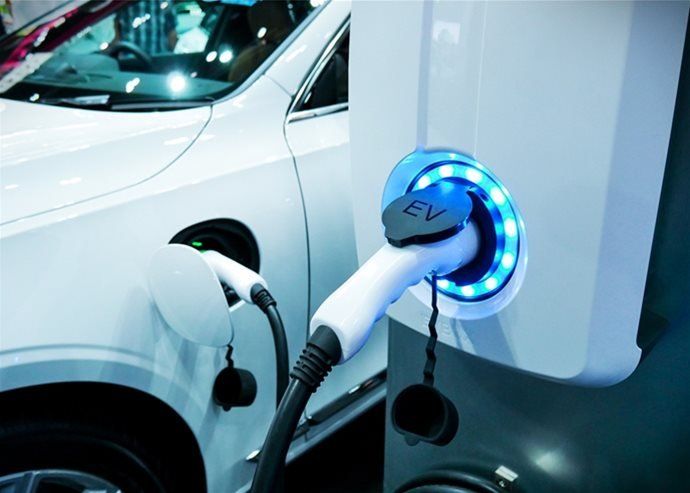
Businesses looking to reward and retain staff members may wish to consider offering an electric vehicle (EV) salary sacrifice scheme.
Not only are many EVs better for the environment, but they could also offer businesses considerable savings.
Businesses can use employee salary sacrifice – similar to schemes offered for pension contributions, cycle to work schemes and childcare vouchers – to fund the purchase of new EVs in a tax-efficient manner.
In principle, salary sacrifice is simple, the employee ‘sacrifices’ part of their salary and the employer invests this in a benefit – in this case, an EV. Using salary sacrifice saves the employee National Insurance Contributions (NICs) and Income Tax.
However, in recent years HM Revenue & Customs (HMRC) has taken a tougher approach to many salary sacrifice schemes, which has often made them less effective.
Thankfully, a special exemption was put in place for ultra-low emission vehicles to encourage motorists to swap their petrol and diesel cars for electric and hybrid models.
When this was confirmed it was made clear that the provision of an EV via salary sacrifice would be considered a benefit-in-kind.
Initially, the benefit-in-kind, or BiK rate, on a pure electric car was 16 per cent, which in many cases meant that there was little or no benefit.
However, following changes in April last year, all pure electric cars now have a zero BiK rate and salary sacrifice benefits can be felt in full.
The zero per cent rate also applies to hybrid vehicles that are first registered from 6 April 2020 that produce between one and 50g/km of CO2 and are capable of at least 130 miles on battery power alone.
The change in rates coincided with more complex rules regarding emission and economy tests, which determine rates for vehicles including hybrids, which may have an impact on existing hybrids acquired via salary sacrifice.
The Treasury has recognised that the older tests may unfairly disadvantage some company hybrid car users and so to achieve fairness it has reduced the BiK rates used for older car models.
This reduction will fall to one per cent in the 2021/22 financial year and will disappear altogether in the following year. This means that there will be no reduction in its BiK rate for these vehicles from April 2022.
People looking to purchase a new company car in the next year should review the Government’s latest rates, which can be found here. Be aware though that these rates change annually and may differ after April 2021.
There are several other tax incentives for both company car users and the businesses that offer this benefit, especially where it is used for business purposes, including:
- Corporation Tax relief
- Reclaiming VAT on a vehicle purchase
- Lower vehicle excise duty
- Plug-in grants
- Tax-efficient electric car charging points
It is not surprising, as technology advances, that more businesses are considering EV salary sacrifice or the purchasing of a fully electric or hybrid fleet.
Beyond the immediate tax benefits for a company, the employer should also look at the advantages that offering a company car can have on retaining staff.
Offering EV salary sacrifice is an excellent way of rewarding employees in a tax-efficient manner that doesn’t incur significant costs for the business or the employee.
Looking further ahead, the Government is now committed to a ban on the sale of new purely petrol and diesel vehicles by 2030, which is now less than a decade away.

The revised version of FRS 102 accounting standards has already brought new reforms for accounting periods starting on or after 1 January 2026 and now the rules are changing again. The Financial Reporting Council (FRC) has announced further amendments to FRS 102 and FRS 105, affecting how certain businesses present their financial statements. With the changes taking effect over the next two years, now is the time to understand what is coming and how it could affect you. Why are the FRS 102 rules changing again? The updates follow the introduction of IFRS 18, which replaces IAS 1 on the presentation of financial statements. To ensure they are aligned with international accounting standards, the FRC has introduced amendments to UK GAAP. However, after consultation, it stopped short of adopting the full IFRS 18 model. What are the new FRS 102 changes? The latest amendments apply to entities using updated Companies Act formats. They include: · Revised presentation requirements for businesses applying adapted balance sheet and profit and loss formats · Moving presentation requirements into new appendices within Sections 4 and 5 · Updated definitions of current assets, non-current assets and current liabilities, plus additional application guidance These changes are taking effect for accounting periods beginning on or after 1 January 2027. Alongside this, earlier reforms came into force from 1 January 2026 and changed revenue recognition and lease accounting. Revenue must now follow a five-step control-based model and businesses must reassess customer contracts. Most leases must also now be recognised on the balance sheet as a right-of-use asset with a corresponding lease liability. Instead of a single lease expense, businesses will record depreciation and interest separately. How can you prepare? To prepare for the current FRS 102 changes, you should now be reviewing contracts and lease liabilities and ensuring you have the correct presentation formats. If you are unsure how the new FRS 102 rules will affect your business, now is the time to seek professional advice. For further support, contact our team today.

With just a few weeks before Making Tax Digital (MTD) for Income Tax comes into effect on 6 April, the countdown is on. HMRC has been sending letters to thousands of sole traders, landlords and self-employed individuals, warning them their reporting obligations are about to change. Whether you have received your letter or not, you should act now to ensure you are compliant. What is MTD for Income Tax? MTD for Income Tax is HMRC’s move towards a fully digital tax system. If you are affected, you will need to: · Keep digital records of your income and expenses · Use HMRC-compatible software · Submit quarterly updates to HMRC · Complete an end-of-year declaration Quarterly updates will not replace your annual Self-Assessment, but it does mean that you will interact with HMRC more regularly throughout the year. Who will be affected? MTD for Income Tax is being rolled out in stages based on your gross income: · April 2026 – gross income over £50,000 · April 2027 – gross income over £30,000 · April 2028 – gross income over £20,000 Those who fall into the first phase of MTD for Income Tax in April must submit their first quarterly update by 7 August 2026. You must also keep your digital records accurate from the start of the tax year and file your Self-Assessment return by 31 January 2027. How can you prepare for MTD for Income Tax? The time to act is now. You need to move away from paper records and understand your new obligations. You will then need to choose an MTD-compatible software or use a suitable bridging solution that works for your finances. It is necessary to sign up for MTD for Income Tax, as HMRC will not automatically do this for you. You can then begin digital record-keeping. HMRC is taking a soft launch approach to MTD for Income Tax and is waiving penalties for the first year, but you must still remain compliant. Our team can advise you on your reporting requirements, help you implement the right software solution and handle quarterly submissions on your behalf. For further advice or support, get in touch today.

Do you have to declare savings interest to HMRC? Learn how the Personal Savings Allowance works, when you pay tax and when to file a tax return.